

By Brittany Schlesener, DACVO
If you’ve ever noticed your dog or cat squinting, you might think it’s just a cute winking expression. However, in veterinary ophthalmology, squinting is actually one of the most important signs that something may be wrong with the eye. Eye conditions can range from mild irritation to vision-threatening emergencies, so understanding what squinting means can help you decide when it’s time to call your veterinarian.
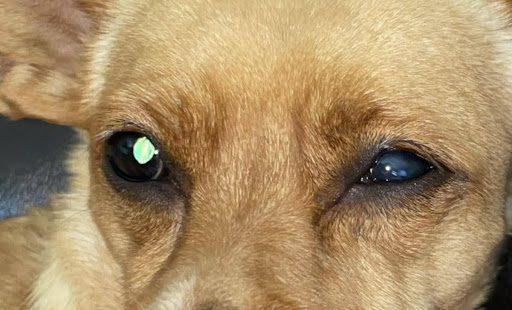
Everyday Causes of Squinting in Dogs and Cats
Sometimes, the reason is simple:
- Foreign material: Dust, pollen, or a stray eyelash can irritate the eye.
- Minor trauma: A bump during play or roughhousing may cause temporary discomfort.
These causes may resolve quickly, but if squinting persists for more than a few hours, it’s time for a closer look.
Medical Concerns That Cause Squinting in Pets
- Corneal ulcers: Scratches or defects on the cornea are extremely painful. They require prompt treatment to prevent infection, scarring, or eye rupture.
- Dry eye: Pets can develop keratoconjunctivitis sicca (“dry eye”), making the surface of the eye feel gritty. This tends to be a life-long condition that can lead to the development of painful new problems (e.g., corneal ulcers) that can even lead to blindness.
- Glaucoma: This is one of the most painful conditions pets can experience, caused by increased pressure inside the eye. It can lead to permanent blindness if untreated. And the window for treatment is very narrow.
- Lens luxation: The lens shifts out of position, which is both painful and vision-threatening, often needing emergency surgery to try to save the eye or at least provide comfort.
- Uveitis: Inflammation inside the eye that may signal infection, trauma, or even systemic diseases (e.g., auto-immune disease, cancer, tick-borne illnesses, etc.).
When Should You See a Veterinary Ophthalmologist?
Any squinting that lasts more than a few hours—or comes with tearing, redness, cloudiness, or pawing at the eye—warrants an exam. In some cases, delays can mean the difference between saving and losing vision.
What Treatment Might Look Like for Squinting in Dogs or Cats
Treatment depends on the cause and may include:
- Topical eye drops
- Oral antibiotics or antivirals for infections
- Pain management
- Surgery for advanced conditions like glaucoma or deep corneal ulcers
Take-Home Message
Squinting is never “just a wink”—it’s your pet telling you something is wrong. If you notice it, don’t wait. A prompt exam by your veterinarian (and, if needed, a veterinary ophthalmologist) can protect your pet’s comfort and vision. If needed, Fetch Specialty & Emergency Veterinary Centers provides advanced ophthalmology care in Brandon, FL. Contact us today to schedule an exam and protect your pet’s vision.
About Us
Fetch Specialty & Emergency Veterinary Centers is a family-owned practice providing elevated specialty care, emergency medicine, and critical care in three convenient locations throughout Florida and South Carolina. Our board-certified veterinarians and highly skilled support staff all share a deep appreciation for pets, people, and the human-animal bond. We recognize how much you love your pet as a part of your family, and that’s why we love what we do!